
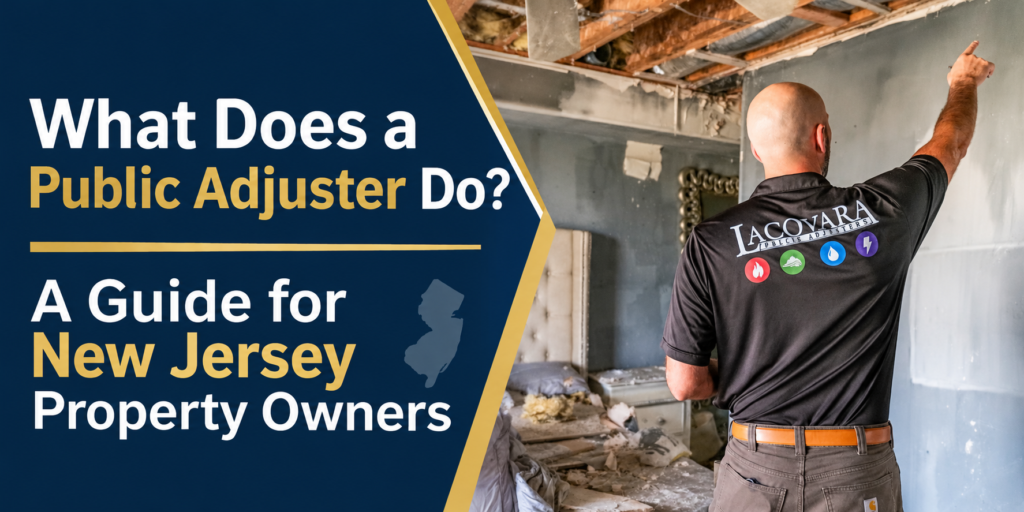
Property damage can create unexpected expenses, stress, and uncertainty for homeowners and business owners. Whether your property has suffered fire damage, water damage, storm damage, or another covered loss, dealing with an insurance claim can be complicated. Understanding what a public adjuster does can help you make informed decisions and protect your financial interests.
A public adjuster works on behalf of the policyholder, helping document property damage, review insurance coverage, prepare claims, and negotiate with the insurance company. Unlike company adjusters, public adjusters represent your interests throughout the claims process.
What Does a Public Adjuster Do After Property Damage?
A public adjuster is a licensed insurance professional who represents property owners during the insurance claims process. Their responsibility is to evaluate the damage, understand the applicable policy coverage, prepare claim documentation, and negotiate with the insurance company for a fair settlement.
Here is how a public adjuster typically helps:
Property Inspection: Examines the property to identify visible and hidden damage.
Insurance Policy Review: Reviews coverage, exclusions, deductibles, and applicable policy provisions.
Damage Documentation: Collects photographs, repair estimates, reports, and supporting evidence.
Claim Preparation: Calculates the estimated cost of repairs and prepares the insurance claim.
Insurance Negotiations: Communicates with the insurance company and challenges inaccurate or incomplete estimates.
Settlement Assistance: Helps move the claim toward resolution and payment.
The goal is to make sure the full extent of covered damage is properly considered.
How Does a Public Adjuster Help With Insurance Claims?
Insurance claims can involve complicated policy language, multiple damage categories, and detailed repair estimates. A public adjuster helps property owners manage these responsibilities while advocating for their interests.
Consider a homeowner in New Jersey who experiences significant water damage after a plumbing failure. The insurance company may initially estimate the visible damage but overlook damaged flooring, insulation, cabinets, or other affected areas.
A public adjuster can conduct a more detailed inspection, document overlooked damage, prepare an independent estimate, and present supporting evidence to the insurer.
This additional work can help address underpaid or incomplete claims and ensure that covered losses receive proper consideration.
When Should You Hire a Public Adjuster in New Jersey?
You should consider hiring a public adjuster when property damage is extensive, your claim is complicated, or you believe the insurance company’s settlement offer does not adequately reflect your covered losses.
Situations where professional representation may help include:
After major fire, smoke, or water damage.
When storm or wind damage affects your roof or property.
When the insurance company offers less than your documented repair costs.
When your claim has been delayed or disputed.
When additional damage is discovered during restoration.
When you need assistance understanding your insurance policy.
Expert recommendation: Consider speaking with a public adjuster early in the claims process. Early documentation can help preserve important evidence before repairs or cleanup change the condition of the property.
Can a Public Adjuster Help With an Underpaid Insurance Claim?
Yes. A public adjuster can review an existing insurance claim and identify potentially overlooked damage, inaccurate repair estimates, or coverage considerations that may not have been properly addressed.
For example, if an insurance company approves $25,000 in repairs but a detailed assessment identifies additional covered damage, a public adjuster can prepare supporting documentation and negotiate for an appropriate adjustment.
Even if you have already filed a claim or received an initial payment, you may still be able to seek professional assistance. Your policy terms, claim status, and applicable deadlines will determine the available options.
How Are Public Adjusters Paid in New Jersey?
Public adjusters commonly work on a contingency fee basis, meaning their compensation is calculated according to an agreed percentage or other fee arrangement specified in the contract.
Before signing an agreement, New Jersey property owners should understand:
The exact compensation arrangement.
What services the adjuster will provide.
Whether any additional charges apply.
The cancellation and termination provisions.
New Jersey law requires a written contract that clearly identifies the services and compensation. It also provides a three-business-day cancellation period under the applicable statutory requirements.
Always review the agreement carefully before signing.
Is Hiring a Public Adjuster Mandatory?
No. Hiring a public adjuster is completely optional. Property owners can file and negotiate insurance claims independently.
However, complicated claims involving extensive structural damage, multiple coverage categories, or disputed repair estimates may benefit from professional representation.
A public adjuster provides an additional level of expertise and helps you understand the insurance claims process before making important settlement decisions.
Get Professional Help With Your New Jersey Property Damage Claim
Understanding what a public adjuster does can make a significant difference when navigating a property insurance claim. From inspecting damage and reviewing coverage to preparing estimates and negotiating with insurers, a public adjuster works to protect the policyholder’s interests.
At Lacovara Public Adjusters, we have been helping New Jersey property owners navigate insurance claims since 1990. Our experienced team assists with fire damage, water damage, storm damage, and other property insurance claims.
If your property has suffered damage or you believe your insurance settlement is insufficient, contact our team to discuss your situation.
Visit Lacovara Public Adjusters to learn how professional claim representation can help you pursue the settlement available under your insurance policy.
Frequently Asked Questions
What is a public adjuster?
A public adjuster is a licensed insurance professional hired by a property owner to represent their interests during an insurance claim. They inspect property damage, review insurance policies, prepare claim estimates, organize supporting documentation, and negotiate with the insurance company on behalf of the policyholder.
What does a public adjuster do after property damage?
After property damage, a public adjuster evaluates the affected areas, documents the damage, reviews the insurance policy, and prepares a detailed claim. They also communicate with the insurance company, address questions about the estimated loss, and negotiate to help secure an appropriate settlement.
Can a public adjuster help with an underpaid insurance claim?
Yes. A public adjuster can review an existing claim, identify potentially overlooked damage, examine repair estimates, and assess applicable policy coverage. If additional covered damage or discrepancies are identified, they can prepare supporting documentation and negotiate with the insurer. Your claim status and policy deadlines will affect your options.
How are public adjusters paid in New Jersey?
Many public adjusters charge a contingency fee based on an agreed percentage of the insurance settlement. The compensation arrangement must be clearly stated in a written contract under New Jersey law. Always review the fee, services, and cancellation provisions before agreeing to representation.
Is hiring a public adjuster mandatory in New Jersey?
No. New Jersey property owners can handle insurance claims themselves without hiring a public adjuster. However, professional assistance may be beneficial when claims involve significant property damage, complicated coverage questions, disputed estimates, or an insurance settlement that appears insufficient.
When is the best time to contact a public adjuster?
It is generally beneficial to contact a public adjuster as soon as possible after property damage occurs. Early involvement helps preserve evidence, document affected areas, and organize claim information before restoration work begins. However, you may also seek assistance after filing a claim or receiving an initial settlement offer.
Does a public adjuster work for the insurance company?
No. A public adjuster represents the policyholder, not the insurance company. Their responsibility is to advocate for the property owner’s interests by evaluating covered damage, preparing claim documentation, and negotiating with the insurer.
Can I hire a public adjuster if the insurance company has already inspected my property?
Yes. You may be able to hire a public adjuster after the insurance company’s inspection. They can review the existing inspection findings, estimates, photographs, and claim documents to identify potential discrepancies or overlooked damage. The available options depend on the claim’s current status and applicable policy deadlines.